
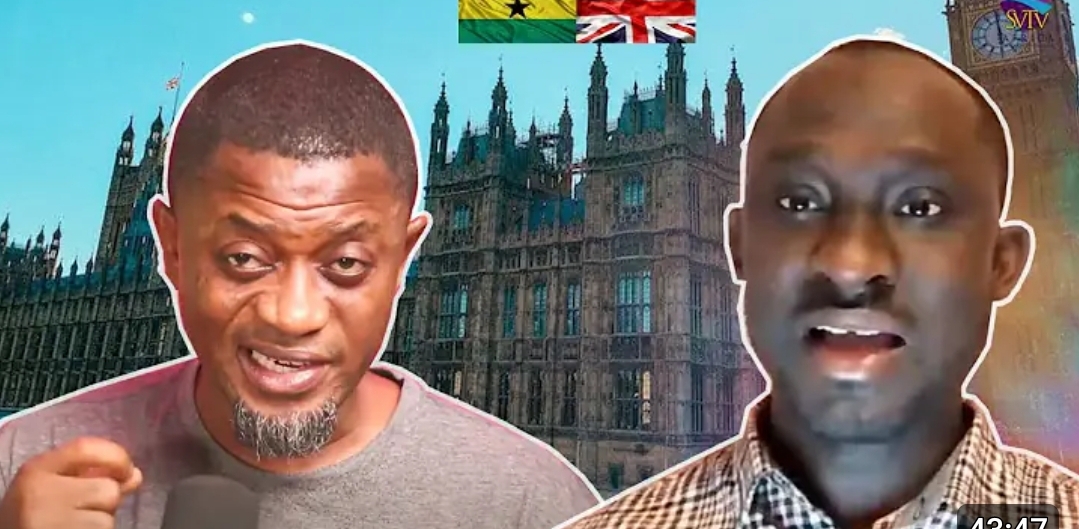
Phillip the Predictor Speaks on Education, Skills, and the Ghanaian Mindset
Phillip the Predictor is a Ghanaian based in the UK who appeared on SVTV Africa’s Daily Hustle Worldwide Show with DJ Nyaami, where he shared deep insights into education, skills development, and the mindset shaping Ghanaian children.
According to Phillip, learning begins the moment a child is born. From crawling, a child starts developing home sense, while formal schooling introduces school sense through teachers and structured learning. Parents entrust their children to teachers with the hope that education will prepare them for life.
However, Phillip argues that Ghana’s education system has shifted away from its original purpose.
“Education in Ghana was meant to train children to acquire skills, but it has turned into a system focused mainly on exams and certificates.”
He explained that many important areas such as social status, culture, music, and practical creativity have gradually been pushed out of the formal education system. Ironically, many successful musicians and creatives today do not have formal education, yet they thrive because of talent and practical skill.
Phillip emphasized that education should be practical, not only theoretical. Every Ghanaian child receives basic education, but the challenge lies in how that education is applied. Some valuable knowledge is learned at home and helps shape a child’s purpose, whether the child chooses to remain in Ghana or travel abroad.
He criticized the way society places excessive pressure on children:
“Parents put anxiety and unnecessary pressure on children, expecting answers and success at all costs, trying to predict the future instead of understanding the child’s abilities.”
Phillip also pointed out that politicians are ordinary people who passed through the same education system, yet their decisions sometimes contradict logic and knowledge. Even university graduates and PhD holders may accept misinformation simply because a pastor or authority figure said it, which raises serious questions about critical thinking within the system.
He believes that if Ghana re-examines the education of the Ghanaian-born child, children can be trained differently—toward employment, innovation, and productivity, not just certificates.
Touching on agriculture, Phillip stated that farming often fails at home not because it is unprofitable, but because people lack the knowledge and structure to succeed in it.
“We have land and resources, yet many people would rather travel abroad to do any job just to make money, while ignoring agriculture at home.”
He concluded that Ghana must shift its mindset, value practical skills, and stop seeing traveling abroad as the only path to success. True development, he says, begins with reforming education, reducing pressure on children, and investing in skills that work locally.
Watch The Video Below:
About The Author


