
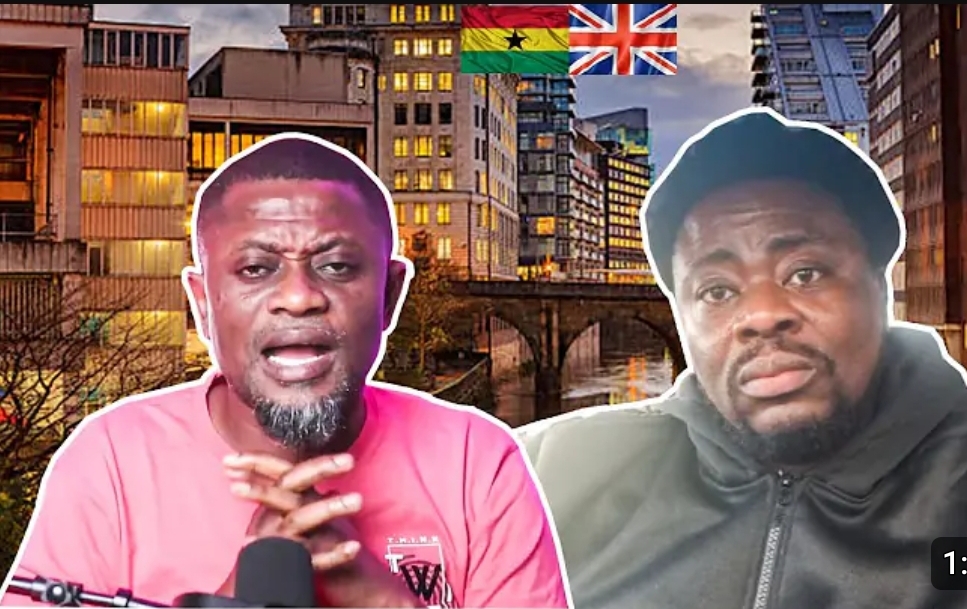
Akoa Kwaku Appiah Urges Ghanaians to Redefine Success and Stop Undermining Their Own Country
Akoa Kwaku Appiah, a Ghanaian based in the United Kingdom and a regular guest on SVTV Africa’s Daily Hustle Worldwide show with DJ Nyaami, has shared a strong message about contentment, success, and the misplaced perception many Africans—especially Ghanaians—have about life abroad.
Speaking during the interview, Akoa Kwaku emphasized that many people leave Ghana not because they lack potential or opportunity, but because they are not content with what they have. He noted that some even travel to countries like Albania and Serbia, without understanding whether such moves will truly improve their lives.
According to him, the obsession with “traveling abroad at all costs” has blinded many young people to the possibilities and opportunities available right in Ghana. He urged Ghanaians to understand that success is not defined by location but by mindset and effort.
He shared the story of a Ghanaian woman who owns two food joints selling instant noodles and, through hard work, has bought a plot of land and saves GH₵200 daily. For him, such examples prove that one can build wealth and stability without leaving the country.
Akoa Kwaku also criticized some immigration officers who, due to corruption or poor judgment, allow people to travel to countries that offer no real future. He stressed that Ghanaians must be educated on what success truly means — hard work, planning, and wise financial management, not necessarily living overseas.
He further argued that many Ghanaians living abroad are not as well-off as people assume. Most own houses and cars on loans, paying them off over 25 to 35 years. He used the example of nurses in the UK, who, despite earning decent wages, still cannot afford to buy land outright and instead pay mortgages for decades.
Akoa Kwaku expressed concern about how some Ghanaians abroad look down on their homeland, mocking the country instead of contributing to its growth. He cautioned against such behavior, saying, “If you live abroad and don’t care about Ghana, you have no right to criticize it.”
He added that poverty is often mental, not physical, and that many people have allowed the dirt or underdeveloped areas they see in Ghana to define their entire perception of the country. He argued that apart from a few infrastructural challenges such as poor roads, limited railways, and unplanned city layouts, Ghana is rich in resources, business potential, and social life.
In conclusion, Akoa Kwaku Appiah called on Ghanaians both home and abroad to appreciate their country, invest in it, and stop spreading negative narratives. He believes that true success begins with gratitude, hard work, and a belief that one can make it anywhere — including Ghana.
Watch The Video Below:
About The Author


