
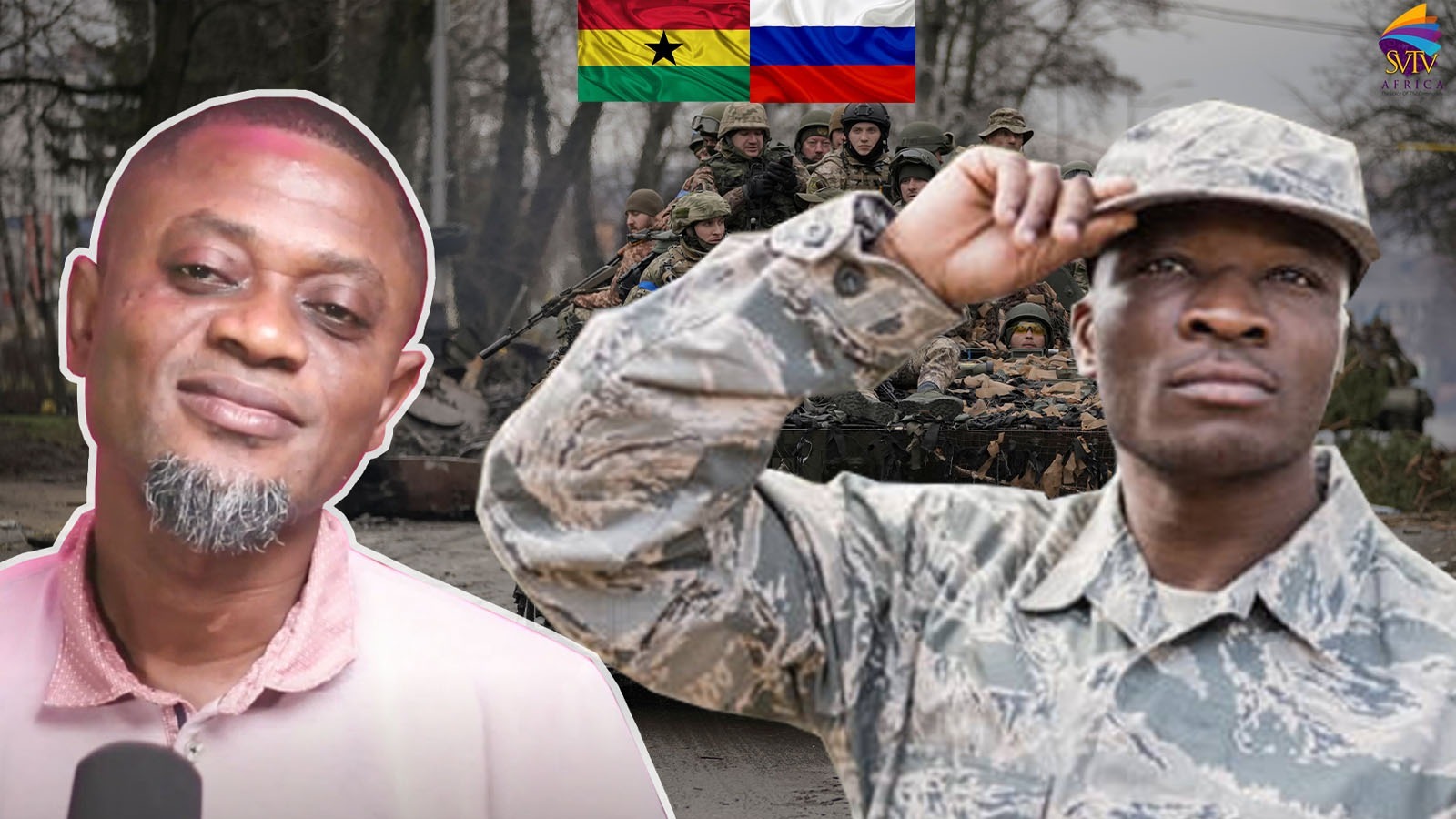
Opoku, a Ghanaian living in Moscow, Russia, recently appeared on SVTV Africa’s Daily Hustle Worldwide show with DJ Nyaami. He shared his experiences after joining the Russian army.
According to Opoku, he arrived in Russia in December 2024, completed his medical examinations, and officially joined the army on January 5, 2025. His contract was set to end on January 5, 2026. Back in Ghana, he and three others had traveled together after a friend borrowed 10,000 GHC to help them. Initially, they were hesitant to sign, but the person who facilitated their travel insisted they sign as they were coming from a children’s home.
Opoku explains that they did not understand the language during the signing, were not allowed to take pictures, and were unaware that they were signing up for a special forces unit. They were made to stand in the snow and had to watch strict procedures before officially starting. Signing the special forces contract promised 5 million rubles in benefits and 2 million rubles in defense pay—equivalent to around 360,000 GHC—which they would receive within six weeks.
During training, Opoku collapsed one day and was sent to the hospital, where he performed cleaning duties for about a month and two weeks. When he recovered, he was sent back to training. He recounts that many African recruits were sent home after conflicts ended, while he remained and was eventually sent to another battalion after his original one was wiped out. He narrowly escaped danger multiple times, including a rocket attack.
Opoku shares that he mostly performed support duties—preparing supplies, food, water, and weapons for soldiers—without being sent to the front lines. Tragically, several Ghanaian recruits he joined with died in combat. Opoku is still struggling with how to inform their families and help them claim the money owed from their service.
He also highlights the harsh treatment recruits faced: soldiers were pushed to the front even when injured, beaten, and forced to join the army under debt or visa pressure. Many recruits from Ghana and other countries were essentially treated like slaves, with high financial demands to join and the constant threat of death. He explains that very few black recruits survive the Russian military, as most succumb to the harsh conditions and frontline dangers.
Opoku concludes by expressing gratitude for surviving the war despite the risks and hardships, noting that his family knew he was in Russia but did not know he had joined the army. He thanks God for protecting him through this experience.
Watch The Video Below;
About The Author


