
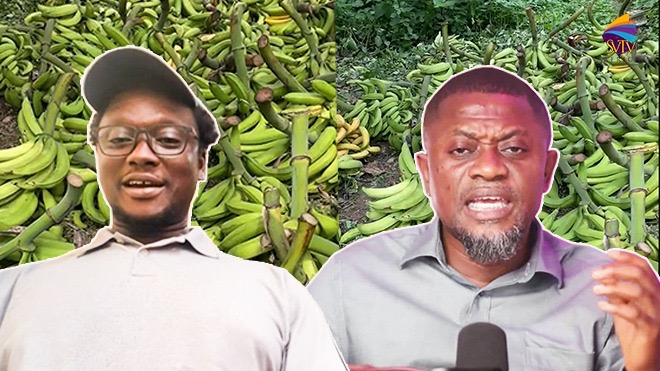
Kwadwo Farmer: A Journey into Agriculture and Agribusiness
Kwadwo Farmer is a Ghanaian farmer based in New Abremu, a mining town. He specializes in cultivating plantain, cocoyam, palm tree, and palm oil production. His passion for farming stems from his mother, who has been a cocoa farmer for years. Initially, he sought land for palm tree cultivation and discovered the vast palm plantations in the area, which inspired him to pursue palm oil production.
His journey into plantain farming began when he acquired his first two plots of land for just GHC 200. Recognizing the potential of plantain alongside palm oil production, he decided to expand his agricultural activities. He believes that Ghana spends billions importing palm oil, and rather than relying on imports, the country should invest more in local production. His interest in oil palm deepened when he researched the regions where it thrives best.
Kwadwo studied marketing at a polytechnic and later pursued a top-up in business management in Spain. However, he didn’t enjoy life abroad and found it challenging to compete with locals for jobs. After completing his studies, he returned to Ghana, initially searching for employment. He started from the bottom, gaining experience in sales and gradually building himself up. In 2018, he moved to another company and relocated to the southern part of the country.
Despite having a well-paying job and a comfortable lifestyle, his mother encouraged him to return to farming. Though he initially resisted, her persistence reignited his interest. He recalls wanting to become a lawyer in his childhood, but discouragement from teachers led him to study geography in high school and later marketing at the university. Eventually, he transitioned fully into farming.
Kwadwo believes that no matter how far one moves away from agriculture, it has a way of drawing people back. He argues that Ghana has yet to fully embrace farming as a viable career. If young people receive proper training and support in agribusiness, it could help alleviate economic hardship. He commends the Forestry Commission for its partnership programs with farmers, which allow youth to access land for farming.
Now in his fourth year of farming, Kwadwo has cultivated various crops, including cayenne pepper, chili pepper, plantain, yam, and cocoyam. He initially started with a 10-acre plantain farm but later scaled it down. This year, he is growing 4 acres of plantain, totaling 10,000 plants. He has observed that once farmers learn the right techniques, they can achieve impressive yields.
Despite the potential in agriculture, he notes that only about 20% of Ghana’s youth are engaged in farming, which he finds alarming. One of the biggest challenges is finding labor, forcing him to bring workers from other regions. He also used to rent tractors from the Forestry Commission to support farmers, but this service has become unreliable in recent years.
Looking ahead, Kwadwo plans to venture into plantain chips production. He has no intention of returning to the corporate world, as farming has provided him with financial stability. He emphasizes that if he had remained in an office job, he would not have achieved as much as he has today.
He believes farming should be at the center of Ghana’s economic policies, just as doctors and engineers are essential to society. Many farmers are unaware of how lucrative agriculture can be. Without the influence of his two brothers, he might never have entered large-scale farming. Today, he employs over 300 workers, sourcing labor from different places to sustain his farms.
Kwadwo is dedicated to making farming attractive to young people. He offers structured systems to maintain farms and keep labor costs manageable. He highlights that the cost of living in farming communities is relatively low, with affordable rent and operational costs. He proudly states, “Dirty jobs bring money,” emphasizing that farming is a profitable venture.
He also points out that many wealthy individuals, especially older ones, have the financial means to invest in farming but often overlook its potential. To support aspiring farmers, he sometimes helps them acquire land, with an acre costing around GHC 5,000. He considers cassava one of the easiest crops to grow, as it guarantees a good yield.
Coming from a family with a strong agricultural background, Kwadwo takes pride in his career. His father, a former bank manager, also transitioned into farming. He is committed to passing down his farming knowledge to his children, ensuring they understand its value alongside their other trades.
For those interested in his work, Kwadwo Farmer can be reached through his social media handles: @farmer_kwadwoand his business page Aagon Farms & Equipment Services.
He concludes with a powerful message: “Every day, we need food, so we need farmers. It’s time to put farmers at the center of our economic policies.”
Watch The Video Below:
About The Author


