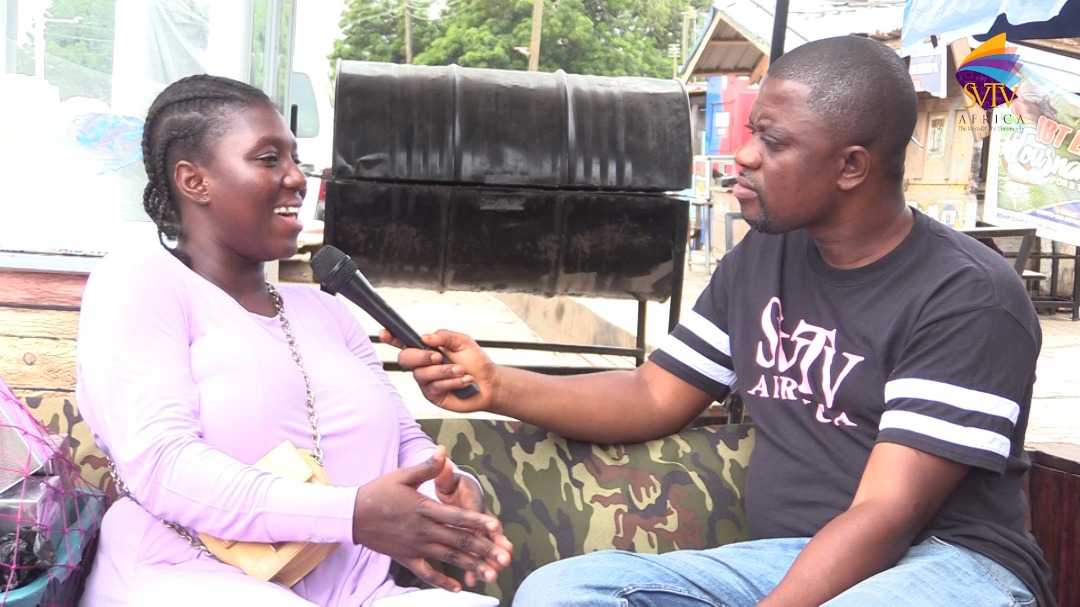

Nanny Goldie, a returning guest on SVTV Africa’s Daily Hustle Worldwide with DJ Nyaami, opened up about some of the difficult experiences she has faced in relationships both in Ghana and abroad. According to her, her past has taught her to be more vigilant when choosing a partner, especially because of the emotional setbacks she has endured.
She explained that she once stayed with a man for many years, but his family rejected her simply because she was not from their tribe. Despite the man being a good person, his relatives insisted he marry someone from their hometown. Goldie met him during her second year at the university, and the two remained together for ten years before eventually parting ways due to the family’s pressure. She said the experience made her realise how deeply tribalism still exists.
Life abroad has also shown her a different side of relationships. She lives in the Norwich area, around Peterborough, and she shared that finding love overseas is not as simple as many people believe. According to her, “Everyone is busy abroad; no one approaches you. Even when you like someone, they hardly check on you because of the fast-paced lifestyle.”
Goldie cautioned women to be careful because some men abroad already have wives in Ghana and may use people for convenience. She contrasted Ghanaian and foreign relationship dynamics, explaining that back home, men often take responsibility for bills and home management, but abroad, everything is strictly 50/50. This financial pressure has contributed to the breakdown of many marriages.
She also noted that many marriages abroad collapse because people are not truthful about their situation. Some men make big promises to women in Ghana about flying them abroad, only for the women to discover later that the reality is much harder than advertised. She advised men to stop making such promises when they do not fully understand the hardships abroad.
Speaking on documentation, she said that if someone needs to marry to secure their papers, they will do it—but women abroad rarely return to Ghana to do the same for men. She believes this imbalance creates unnecessary tension and pressure. Goldie also mentioned that women tend to help men more abroad—for example, meeting a struggling man at a train station and assisting him—but men rarely extend the same kindness.
Touching on mental health, she added that many Black people abroad struggle with depression because of the stress and isolation. She explained that if a person is not naturally a giver, the challenges in the UK will prevent them from helping others or doing charitable work.
Goldie is currently in a relationship, but she dislikes long-distance arrangements because they make couples live separate lives. She believes women are complex, emotional beings, and because they were created from a man’s rib, there will always be a natural conflict that requires compromise and understanding.
Her story reflects the emotional and social realities many Africans face while navigating relationships abroad—ranging from cultural rejection to loneliness, financial strain, and the mental burden of life overseas.
Watch The Video Below:
About The Author